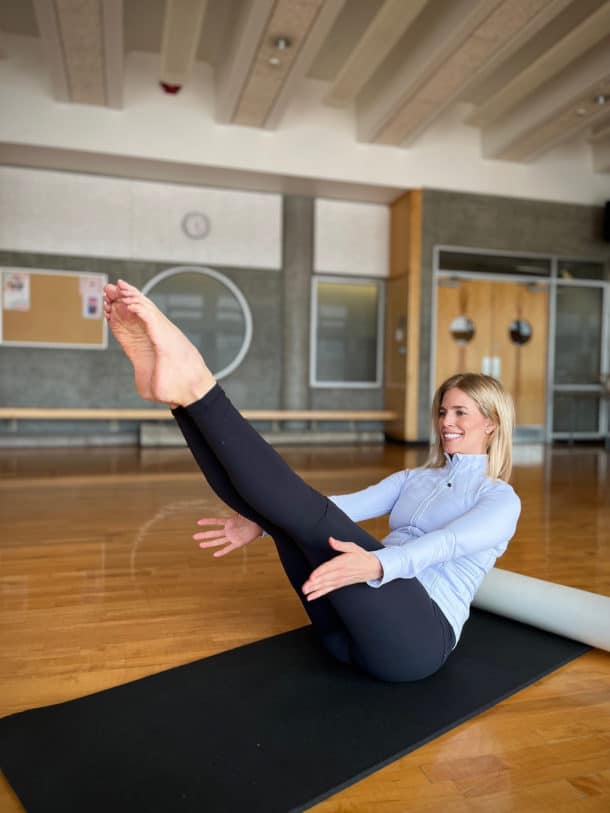
What to buy, why it matters, and how to choose the right props for each class
Props are a key part of the Pilates experience—whether you’re practicing at home, joining a live class, or streaming a session on demand. The right tools can support your alignment, deepen your connection to the movement, and simulate the challenge of Pilates equipment without turning your living room into a full studio.
Here’s a guide to help you choose the essential props for each class, understand what they do, and start building your Pilates toolkit.
What You’ll Need (by Class)
✅ Balanced Body Pilates
Perfect for building strength, flexibility, and full-body coordination.
Recommended props:
-
Theraband (Red or Blue) – Click to purchase in Canada or the US.
- Pilates Ball – Click to purchase in Canada or the US.
✅ Mobility & Recovery
Focused on mobility, gentle strengthening, and myofascial release.
Recommended props:
-
Yoga or Pilates Mat – Click to purchase in Canada or the US.
-
Foam Roller (medium or soft density) – Click to purchase in Canada or the US.
-
Franklin Method Balls -Click to purchase in Canada or the US.
Why Use Props?
If you’re new to Pilates, props offer support and structure. I often introduce them after observing how someone moves—especially if they’re dealing with posture imbalances, sport-specific conditioning, or lifelong alignment patterns.
Props can also increase challenge by adding resistance, feedback, or instability—making the exercises more effective.
And here’s the truth: most of us have some physical asymmetry. It’s completely normal. Props help address it, not just compensate for it.
Prop-by-Prop Breakdown
1. Mat
Your mat should match your surface and support your spine.
-
Yoga Mat: Fine on carpet or for light sessions.
-
Pilates Mat: Thicker and more durable—ideal for hard floors and spinal support.
Tip: Pilates mats are more expensive but last longer and protect your back better.
2. Theraband
Versatile and essential.
-
Red (light) and Blue (medium-heavy) are the two I use most.
-
Choose a 6-foot band or roll (or longer if you’re tall) so you can cut it to the right size.
Tip: Men often prefer the Blue for extra support during flexibility and strength work.
3. Pilates Balls
Small, inflatable balls are great for core activation, posture work, and alignment.
-
One is good. Two is better (no need to deflate/inflate during workouts).
-
If you’re tall, a slightly larger ball may help. – Canada and US links
4. Hand Weights
I typically use 2 lb weights in class.
-
You can go lighter or heavier, but I don’t recommend more than 3 lbs—too much can interfere with form.
🎥 Watch my short video: “Weights for Pilates Mat” to learn more about hand weights, weighted balls, and wrist weights.
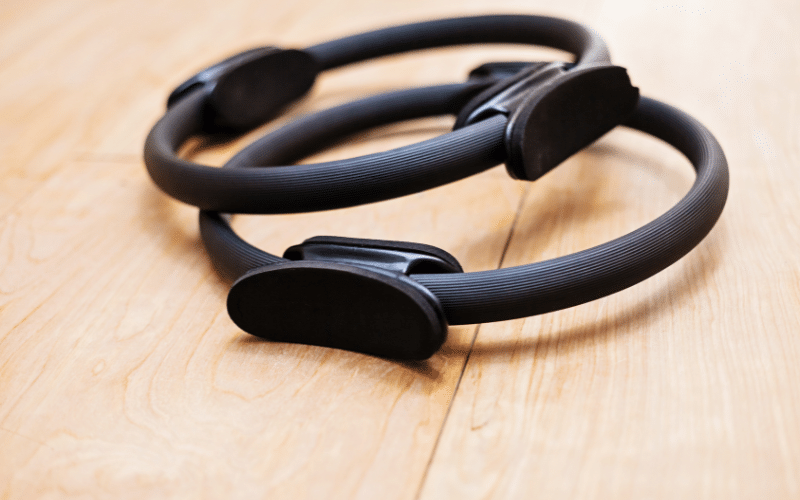
5. Pilates Ring
Also called a “magic circle,” this is a flexible ring used to challenge your arms, thighs, and core.
-
A basic ring is just fine—no need for the deluxe version unless you want to treat yourself.
6. Foam Roller
Used in Stretch & Tone and other mobility classes.
-
Should be long enough to support your head, spine, and pelvis when lying down.
-
Medium or soft density is best for comfort.
Tip: A softer roller is easier on the spine and more comfortable when working on tight muscles.
7. Franklin Method Balls
Textured balls used for footwork, ankle strengthening, and fascial release.
-
They improve foot function, reduce cramping, and support balance.
8. Loop Bands
Fabric loop bands are a newer favorite in my classes.
-
They offer resistance for glute and leg work—and unlike rubber bands, they don’t roll up or pinch during sideline exercises.
Travel Tip
If you’re on the go, just pack bands and a ball. They’re light, portable, and super effective. Many hotels have rollers, weights, or mats available—just ask. Travel Pack – Click to purchase in Canada or the US.
Start Simple. Grow Your Kit.
You don’t need everything all at once. Start with what’s required for your class and build from there. Over time, your props will grow with your practice.
Still unsure? Email me your questions—I’m happy to help you get set up with what’s right for your body and goals.
Put Your Pilates Props into Practice
The value of a Pilates prop comes from how you use it. Placement, resistance, and small adjustments can help you find support, improve control, or add challenge.
Explore props with Pilates & in the format that works for you:
-
In person at Coal Harbour Community Centre in Vancouver: Learn through guided practice in classes and small groups, including Mobility + Recovery, Strength + Stretch, Bone + Balance, and Strength + Flow.
-
Virtual classes: Join from home for live instruction, feedback, and guidance on using your props.
-
On-demand classes: Practice on your own schedule, pausing or replaying demonstrations as you learn.
Explore classes and on-demand membership options.
For short demonstrations explaining prop placement and use, follow @PilatesandWellbeing on Instagram and Pilates & on YouTube. My videos show how I use different props and the details that can make a difference in your practice.
Prefer individual guidance? Explore private Pilates lessons for help choosing and using props for your goals.
Updated: October 6, 2026