
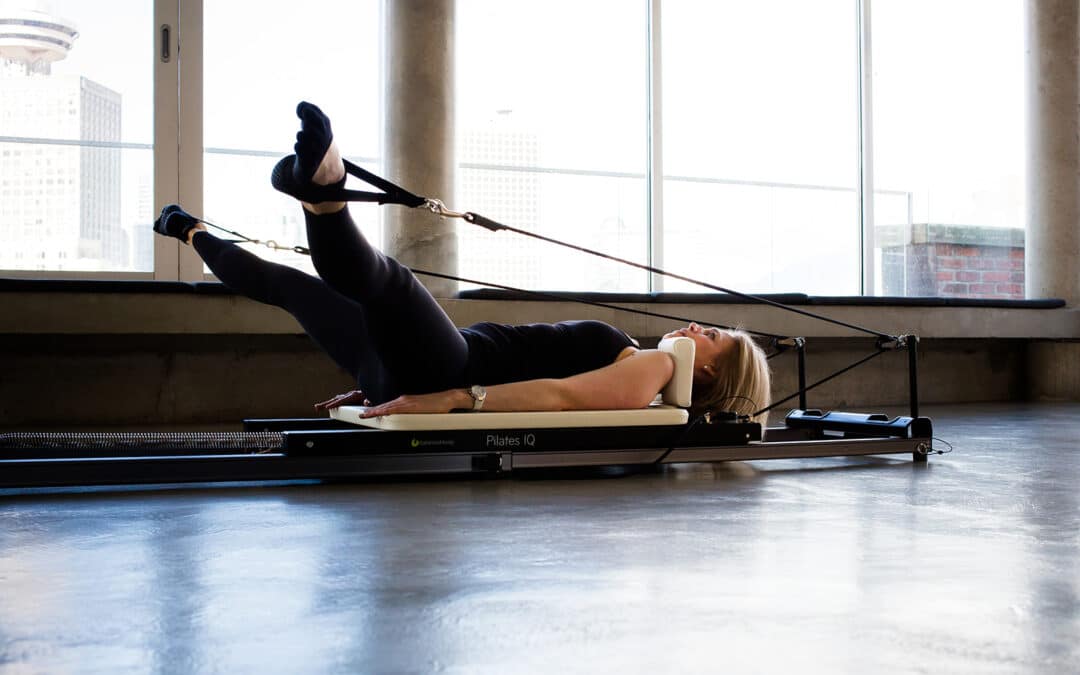
How to Build Your Pilates Body: Strength, Shape and the “Long, Lean” Look
Build a practice that supports definition, posture and confident movement—and understand what exercise can change.
By Shannon Smith, Pilates &
When people say they want a Pilates body, they often mean more defined arms, a firmer middle, legs that feel strong without looking larger, and an ease of movement that shows in how they stand and walk.
It is reasonable to care about how you look. It helps to understand how that appearance develops.
A Pilates body does not have one shape. Your build, muscle development, body fat and posture all contribute to your appearance. Pilates can help you develop strength and movement skills; it cannot guarantee someone else’s proportions.
What does “long, lean muscle” actually mean?
“Long, lean” is an aesthetic description, rather than a separate type of muscle.
During an eccentric contraction, a muscle lengthens while producing force—for example, as you control the lowering phase of an exercise. That action happens in Pilates and in weight training.
Research shows that training can change muscle architecture, including fascicle length in some circumstances. But those adaptations do not demonstrate that Pilates uniquely produces longer-looking muscles or narrower thighs. Eccentric training can also stimulate muscle growth. [1]
In everyday language, the look people describe usually involves some combination of muscle definition, their natural proportions, posture and how they carry themselves.
Will lifting heavy weights make me bulky?
Women can build muscle through resistance training. Some gain size more readily than others, and preferences about that size are personal.
However, lifting heavy weights does not automatically create a large physique. The total training program matters: exercise selection, weekly volume, effort, progression, nutrition and time.
Light weights and high repetitions are not a guarantee against growth. Research comparing different loads shows that muscle growth can occur across a broad range when exercise is sufficiently demanding. [2]
You can train for greater strength without making maximum muscle growth your main goal. You also do not have to avoid useful resistance because a heavier weight sounds intimidating.
Build a balanced foundation
A useful program challenges the legs, hips, trunk, back and arms. Depending on your experience and health needs, it might include:
- A squat or sit-to-stand pattern.
- A hip hinge or another suitable hip-strengthening exercise.
- A push, such as a supported push-up.
- A pull, such as a resistance-band row.
- Trunk control while moving your arms or legs.
- Balance and mobility work that supports those movements.
These examples are starting points for individualized programming, rather than a checklist everyone must perform in the same way.
Pilates adds attention to coordination and movement quality. Notice how you manage your pelvis, shoulders and breathing as the challenge increases.
Give your body a reason to adapt
Doing the same comfortable routine indefinitely may not produce the change you want.
Progress gradually by adjusting resistance, leverage, repetitions, sets or support. Choose the change according to the goal. A longer hold may emphasize endurance; greater resistance may provide a different strength challenge.
ACSM recommends training all major muscle groups at least twice weekly and recognizes benefits from bands, bodyweight and other resistance tools. [3]
An effective starting routine might include two appropriately challenging strength sessions, regular walking and shorter mobility practices. Adapt the schedule to your recovery and existing activity.
Support the work with food and recovery
Eat enough to support your activity, include protein-containing foods regularly, and make recovery part of the plan. Protein supports adaptation to resistance training, but there is no single grams-per-pound target everyone needs to follow. [4]
If reducing body fat is an appropriate goal, consider the whole pattern of eating and activity. Exercises for one area cannot reliably decide where fat is lost. [5]
Avoid making restriction the centerpiece of a plan intended to build a stronger body.
Measure more than appearance
Look for greater resistance with good control, easier stairs, steadier balance and more confidence in daily movement. Appearance changes may take longer and will vary.
My goal at Pilates & is to help you build a body you can use with confidence, with a practice that develops alongside you.
Explore classes and private sessions for your next step. Then read How to Maintain Your Pilates Body as You Age for the everyday habits that support your progress.
Strong body. Calm mind. Balanced life.
Research & Further Reading
- Chronic Adaptations to Eccentric Training: A Systematic Review (2017).
- Resistance Training Load Effects on Muscle Hypertrophy and Strength Gain (2021).
- ACSM resistance training guidance (2026).
- Protein supplementation and resistance-training adaptations (2018).
- Localized exercise and fat reduction: systematic review and meta-analysis (2022).
Contact Us
Create a Free Account
Receive weekly emails with workouts, tips & offers to help you live more vibrantly.