
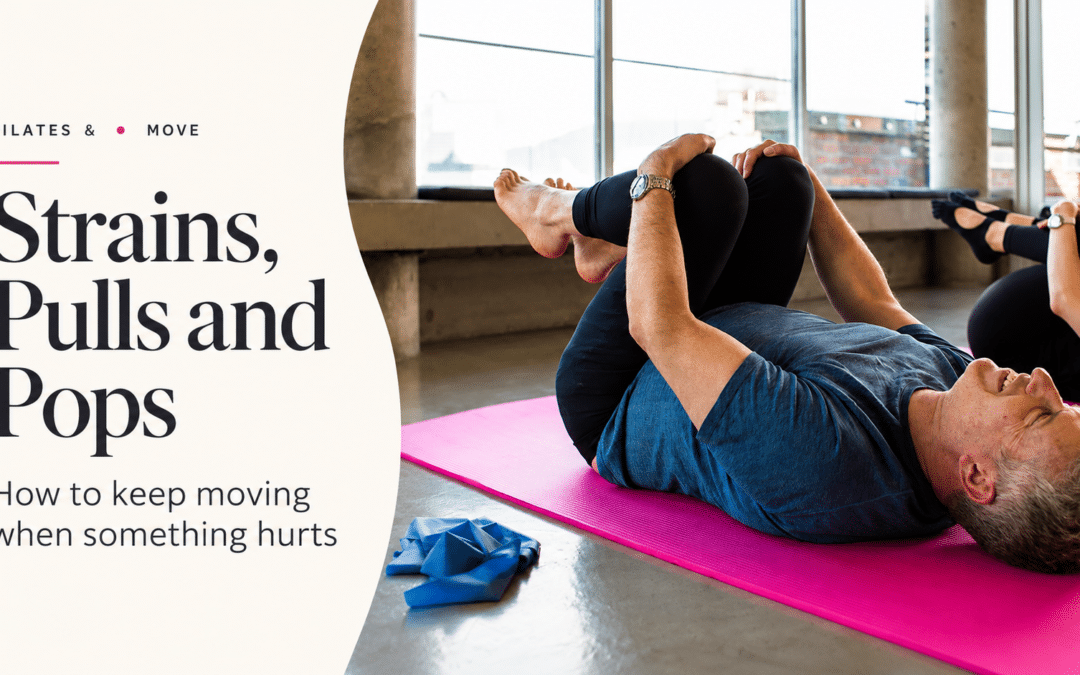
Strains, Pulls and Pops: How to Keep Moving When Something Hurts
I pulled a hamstring in a yoga class. It was one of the experiences that brought me back to Pilates. We stretch in Pilates, too, but I appreciated learning to work within my available range rather than treating the furthest possible stretch as the goal.
Since then, I’ve heard many versions of the same story from my students. Someone strains a muscle while gardening, feels a sharp pain on a walk, or hears a pop while playing a sport. Some become worried about moving at all. Others keep going and hope it will work itself out. I’ve been in both camps.
The question I hear most often is: “My doctor said to modify as needed and keep moving. What does that actually mean in class?”
First, stop and assess
A conversation with Peter Gerbino, MD, changed how I respond when something happens during activity. His advice was to stop what I was doing and assess the injury before deciding what to do next.
I remembered that advice when I felt a pop on the tennis court. My instinct might once have been to test it by playing another point. Instead, I stopped. A pop does not tell you exactly what has been injured, but it is a reason to pay attention to what follows: pain, swelling, bruising, weakness, or difficulty using the affected area.
That pause matters. You can decide whether this feels like a minor discomfort you can manage, or whether you need a medical assessment before returning to activity.
Is it a strain, a pull, or a pop?
We often use pull and strain to describe the same thing: a muscle that has been stretched beyond what it could comfortably handle, sometimes with damage to its fibres. A strain can be mild or more serious. Pain, tenderness, swelling, bruising, and reduced strength or movement can all be signs.
A pop describes something you felt or heard, not a diagnosis. It may accompany an injury to a muscle, tendon, ligament, or joint. If a pop comes with significant pain, swelling, weakness, a visible change in shape, or difficulty bearing weight or using the limb, seek prompt medical advice. The same applies if symptoms are getting worse rather than improving.
If you are unsure what happened, you do not have to diagnose yourself in order to make a sensible first decision: stop the activity that caused the pain and get advice when the symptoms warrant it.
“Keep moving” does not mean “keep doing the same thing”
My longest lesson in this came from a hip injury after a reformer class taught by a yoga instructor. I continued practising with her, even though a repeated standing lunge series put substantial load on the painful hip. Looking back, I should have changed course sooner.
My GP offered a referral to sports medicine because we could not tell whether the pain came from a hip rotator injury or piriformis syndrome. By the time I saw her, I felt about 80% recovered and believed that, with more time, I would continue to improve.
What helped me progress from there was changing how I moved. I removed the load that aggravated my hip, paid closer attention to alignment, and gradually added gentle stretching within the range I had then—rather than trying to force my old range back. That stretching was especially helpful for me in the later stage of recovery. Today, I have my full range of motion and strength and stability back, with almost all of my flexibility restored.
It took about a year. My experience is not a prescription for someone else’s hip pain, and I would make the decision about a sports medicine assessment differently if I were not improving. It taught me that continuing a practice is only helpful when the practice can change with you.
After an injury, the right movement depends on what was injured and where you are in recovery. Early on, that may mean protecting the area and moving other parts of your body. Later, it may mean a comfortable range of motion, followed by a gradual return to strength and activity. Sharp or increasing pain, renewed swelling, or a loss of strength or movement are reasons to stop and seek advice.
What can a modification look like in Pilates?
A modification should respond to your symptoms and goals. It might mean:
-
Changing from standing to sitting or lying down.
-
Using a smaller range of motion.
-
Reducing resistance, repetitions, or time under load.
-
Changing an exercise so the injured area is not bearing the same load.
-
Working on other movements while the painful area recovers.
You should be able to tell your instructor which movements hurt, what feels comfortable, and what your clinician has advised. Your instructor can then help you adapt the class. If an exercise repeatedly aggravates the injury, doing a little less of the same exercise may not be enough; you may need a different exercise for now.
An assessment or private Pilates session can give us time to look at how you move, try alternatives, and build a set of modifications you understand and can use in class or at home. Pilates instruction can support your movement practice, but it does not replace a medical diagnosis or an individual rehabilitation plan.
Getting the right help in B.C.
Physiotherapy can be valuable, but many people in British Columbia do not have extended coverage for it. MSP covers outpatient physiotherapy only for people who qualify for supplementary benefits, with limited coverage.
If you need a clearer diagnosis or are not recovering as expected, ask your GP or nurse practitioner whether a referral to a sports medicine physician is appropriate. A medically necessary consultation with an MSP-enrolled physician may be covered by MSP; confirm the referral and any clinic fees when booking. A sports medicine assessment and a physiotherapy course serve different purposes, but knowing the available route to an assessment can help you make your next decision.
Progress can continue while you recover
I understand the disappointment of an injury. I also know how tempting it is to measure recovery by whether you can do everything you did before.
Try a different question: What movement can I do well today, and what would a sensible next step look like? Sometimes that means continuing with modifications. Sometimes it means stepping away from one exercise while you get assessed. As my hip taught me, it can also mean letting go of a movement that keeps setting you back.
You do not have to push through pain to stay committed to your practice. You can pause, get the help you need, and find a way to keep moving that meets your body where it is.
This article is general education, not a diagnosis or treatment plan. Seek medical advice for a significant injury, concerning symptoms, or pain that persists or worsens. Follow the guidance of the clinician who has assessed you.
Contact Us
Create a Free Account
Receive weekly emails with workouts, tips & offers to help you live more vibrantly.