
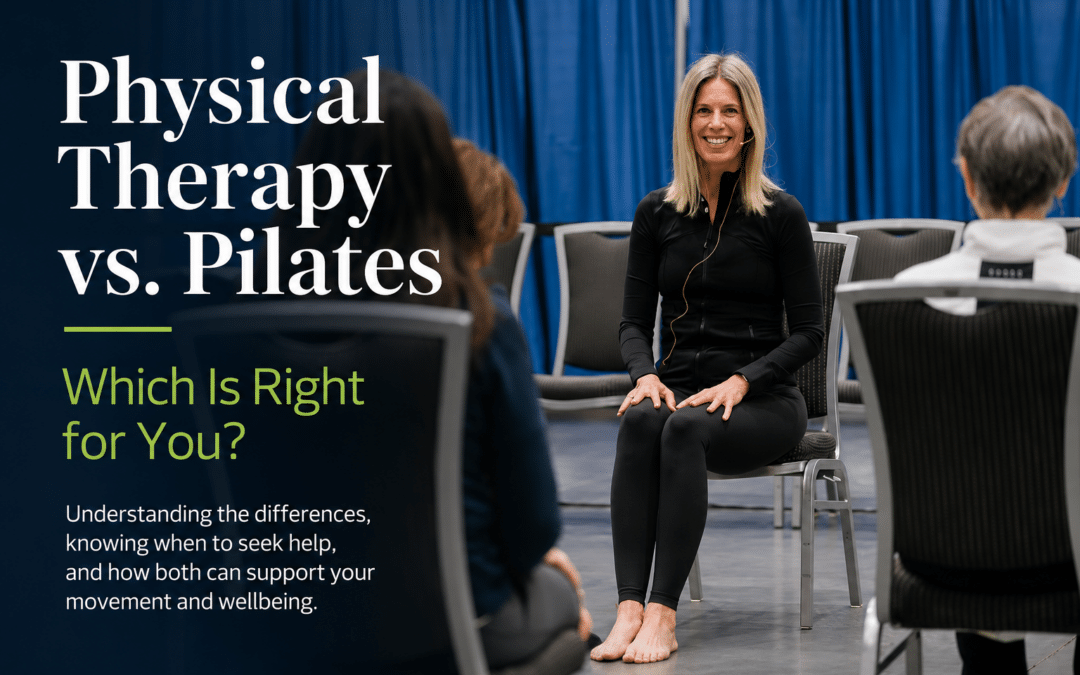
Should You Choose Physical Therapy or Pilates?
Many people wonder whether they should book an appointment with a physical therapist or join a Pilates class when they experience pain, stiffness, weakness, or changes in mobility.
The answer is that both can play an important role in helping you move better, feel stronger, and maintain your quality of life. Understanding the differences can help you choose the right support at the right time.
When Physical Therapy May Be the Best First Step
Physical therapists are healthcare professionals trained to assess, diagnose, and treat injuries, medical conditions, and movement impairments.
A physical therapy assessment may be the best place to start if you are experiencing:
- A new injury
- Significant pain that is worsening
- Post-surgical rehabilitation needs
- Neurological conditions affecting movement or balance
- Unexplained weakness, numbness, or tingling
- Difficulty performing everyday activities
- A sudden change in mobility or function
Physical therapists can provide a diagnosis, create a treatment plan, and prescribe specific exercises to support recovery.
Their goal is often to reduce pain, restore function, and help you safely return to normal activities.
When Pilates May Be a Good Choice
Pilates is a movement practice that focuses on strength, mobility, balance, posture, breathing, and body awareness.
Many people participate in Pilates to:
- Improve core strength
- Increase flexibility and mobility
- Enhance balance and stability
- Support healthy aging
- Build confidence in movement
- Reduce stiffness associated with sedentary lifestyles
- Maintain physical function after completing rehabilitation
Pilates can be particularly beneficial for individuals who want to stay active, prevent future issues, and continue building strength and resilience throughout life.
The Overlap Between Physical Therapy and Pilates
The line between physical therapy and Pilates is often less clear than people think.
Many physical therapists use Pilates-based exercises in rehabilitation programs. Likewise, experienced Pilates teachers frequently work with clients who have been referred by healthcare providers.
In my own teaching, it is common for students to arrive with guidance from their physical therapist, physician, specialist, or other healthcare practitioner. Together, we can help support their ongoing movement goals.
The key difference is that physical therapists diagnose and treat medical conditions, while Pilates teachers provide movement education and exercise instruction.
Sometimes the Answer Is Both
In many cases, the best results come from combining the expertise of multiple professionals.
For example:
- A physical therapist may help someone recover from a shoulder injury.
- A Pilates teacher may help them rebuild strength, confidence, and overall movement capacity after rehabilitation is complete.
Similarly, someone managing osteoporosis may work with their physician, physical therapist, and Pilates teacher to develop a safe and effective movement plan.
Movement is rarely a one-size-fits-all solution.
How I Approach Student Care
One of the first questions I often ask new students is whether they are working with any healthcare providers.
Understanding the recommendations of a physical therapist, physician, chiropractor, acupuncturist, or specialist helps ensure that movement programming supports—not conflicts with—their overall care plan.
As Pilates teachers, we work within our scope of practice. When something appears outside that scope, the appropriate next step may be a referral back to a healthcare professional.
My goal is always to help people find the right support, whether that means joining a Pilates class, working privately, seeking a healthcare assessment, or combining multiple approaches.
The Bottom Line
Physical therapy and Pilates are not competing options. They are complementary tools that can support health, recovery, and long-term wellbeing.
If you have a new injury, significant pain, or a medical concern, start with a healthcare professional such as a physical therapist or physician.
If your goal is to build strength, improve mobility, enhance balance, and stay active for years to come, Pilates may be an excellent addition to your routine.
And in many cases, the best approach is a team effort that keeps you moving safely, confidently, and consistently.
Not sure whether a Pilates class, private session, or healthcare assessment is the right next step? Contact Pilates & to discuss your goals and determine the best path forward for your movement journey.
Contact Us
Create a Free Account
Receive weekly emails with workouts, tips & offers to help you live more vibrantly.